finally, learn
Tagalog
the Filipino way

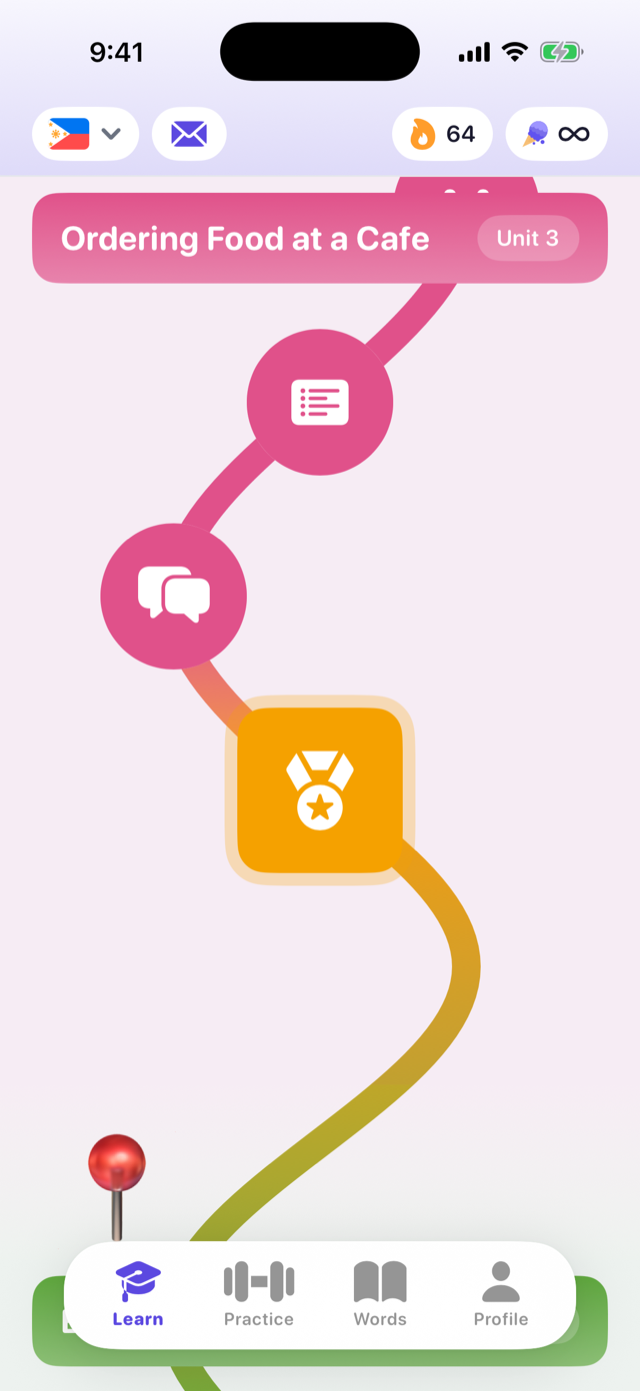
gamified lessons with roots, affixes, and real Filipino culture

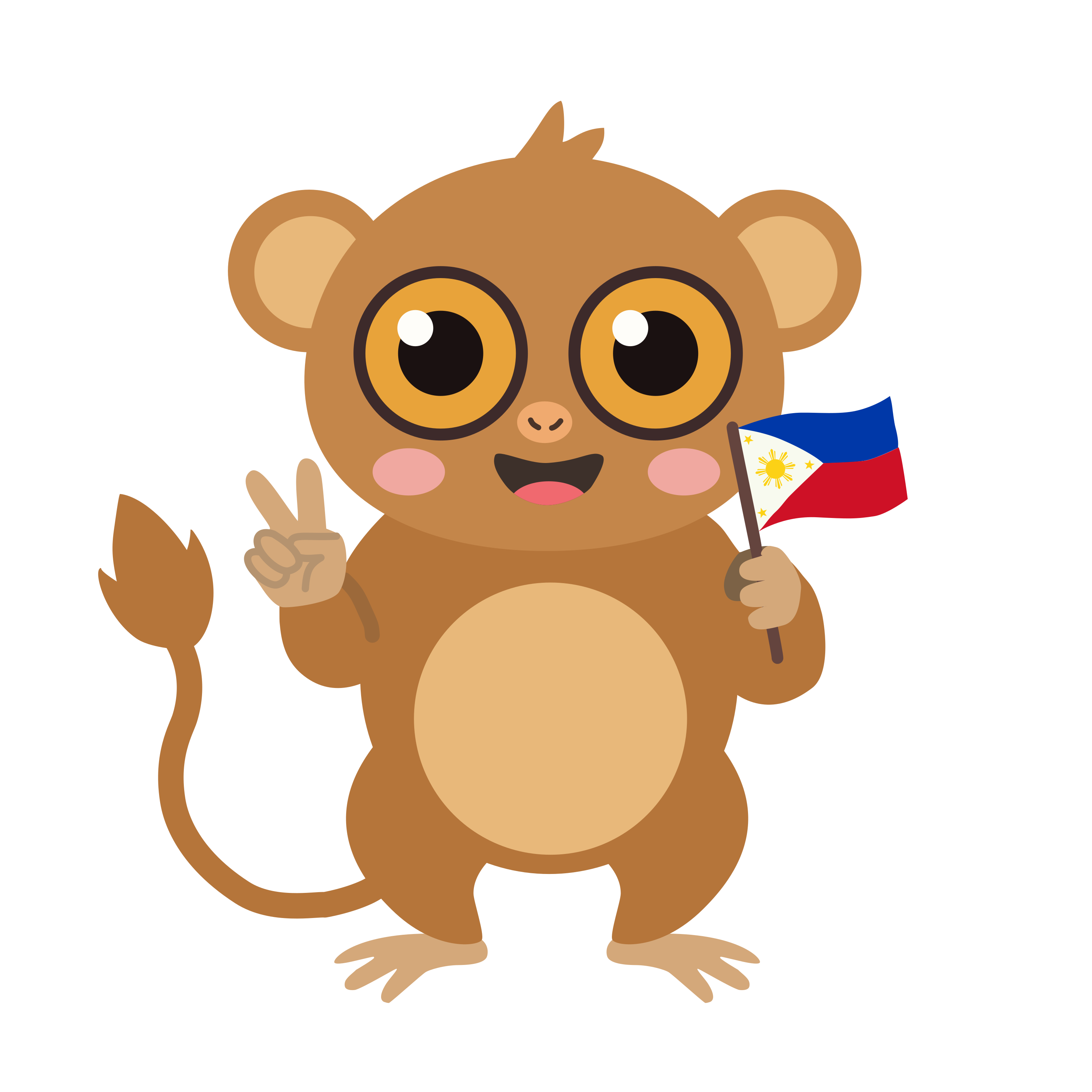
Bunso the Tarsier mascot waving the Philippine flag

Not just flashcards

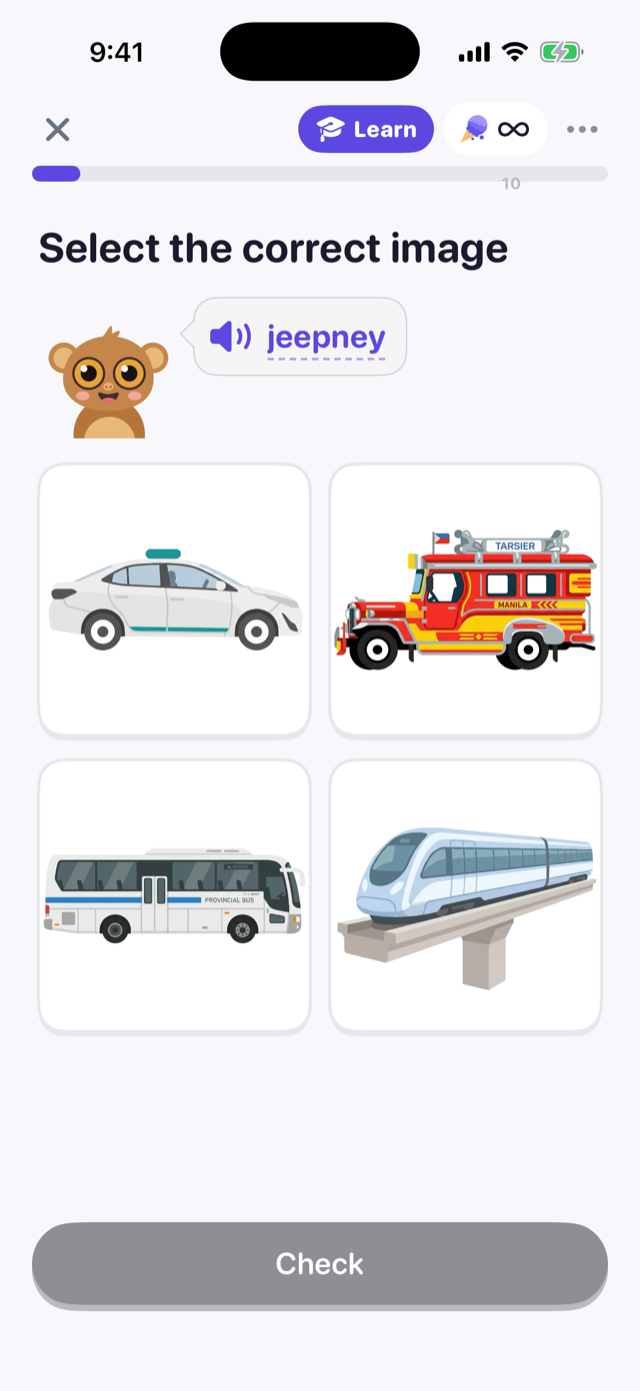
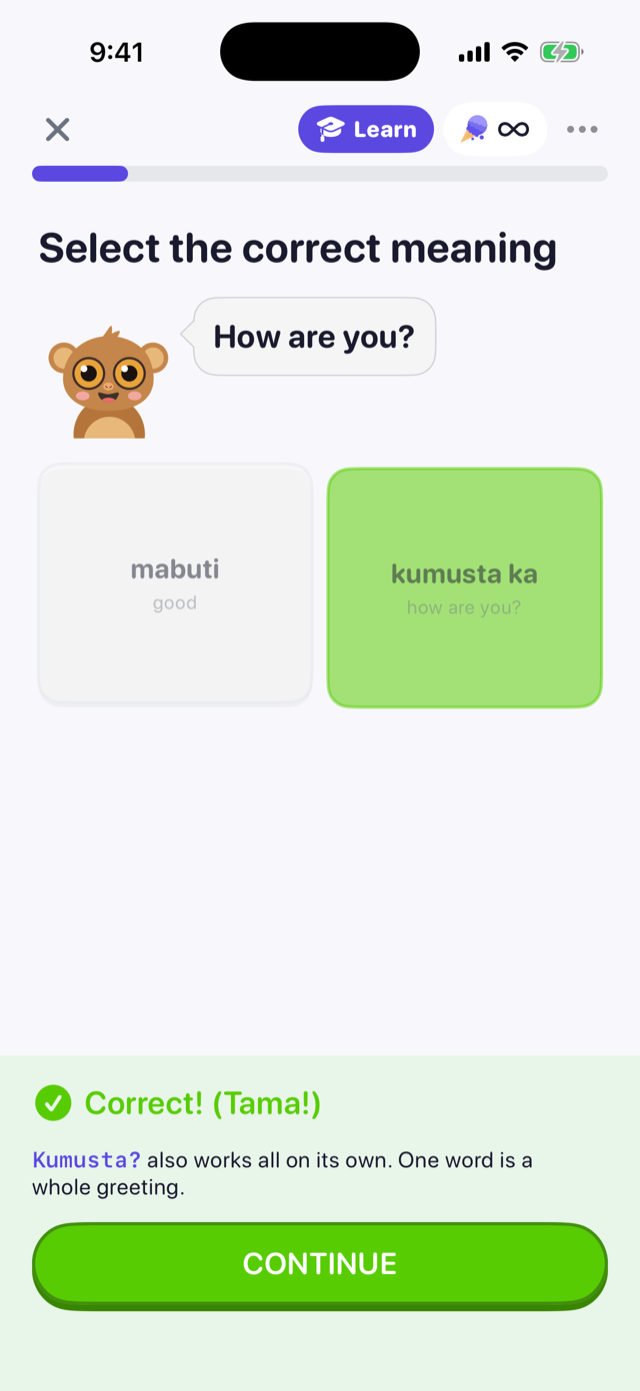
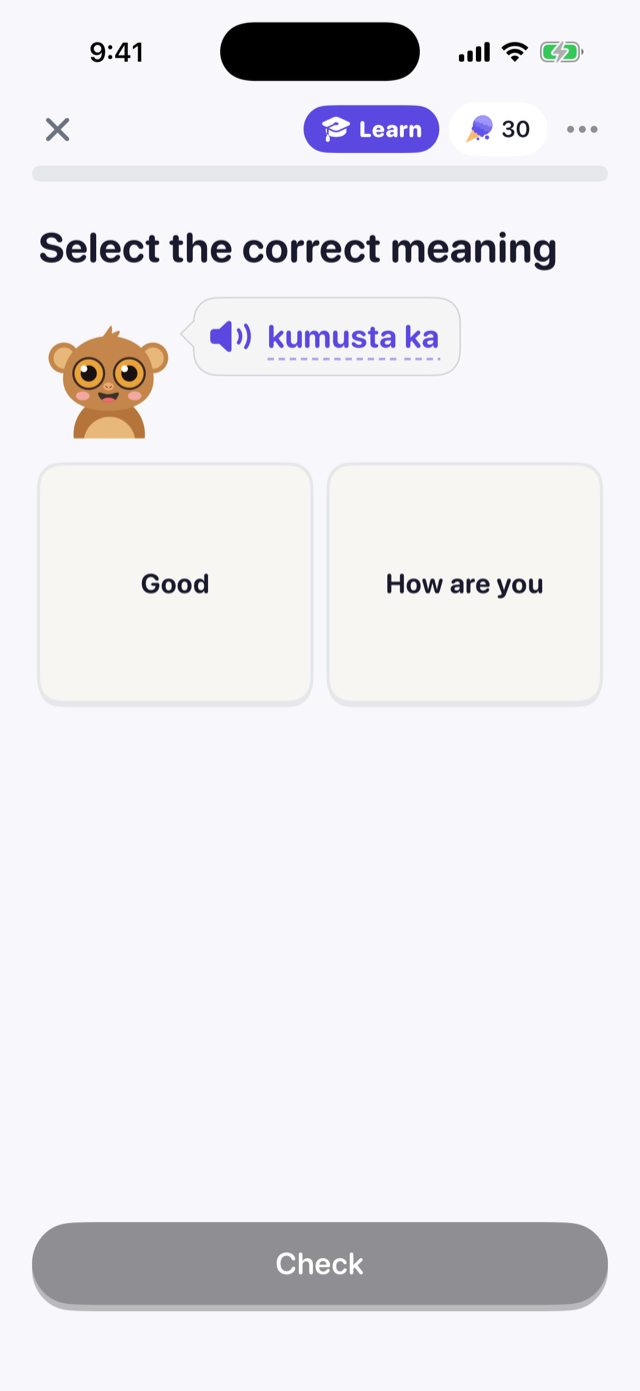
Tarsier teaches Tagalog the way Filipinos actually speak it.

🌱

Roots & Affixes

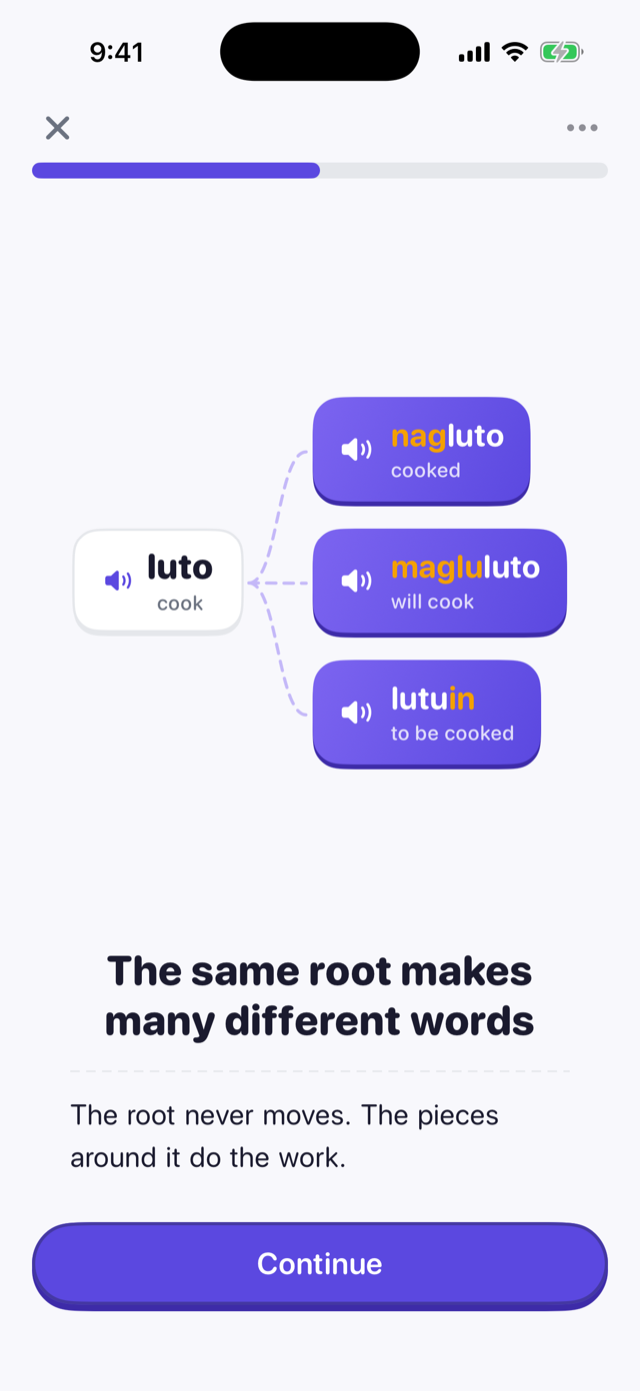
Learn how prefixes like nag- and mag- transform root words. Understand the system, not just memorize.

🇵🇭

Real Filipino Culture

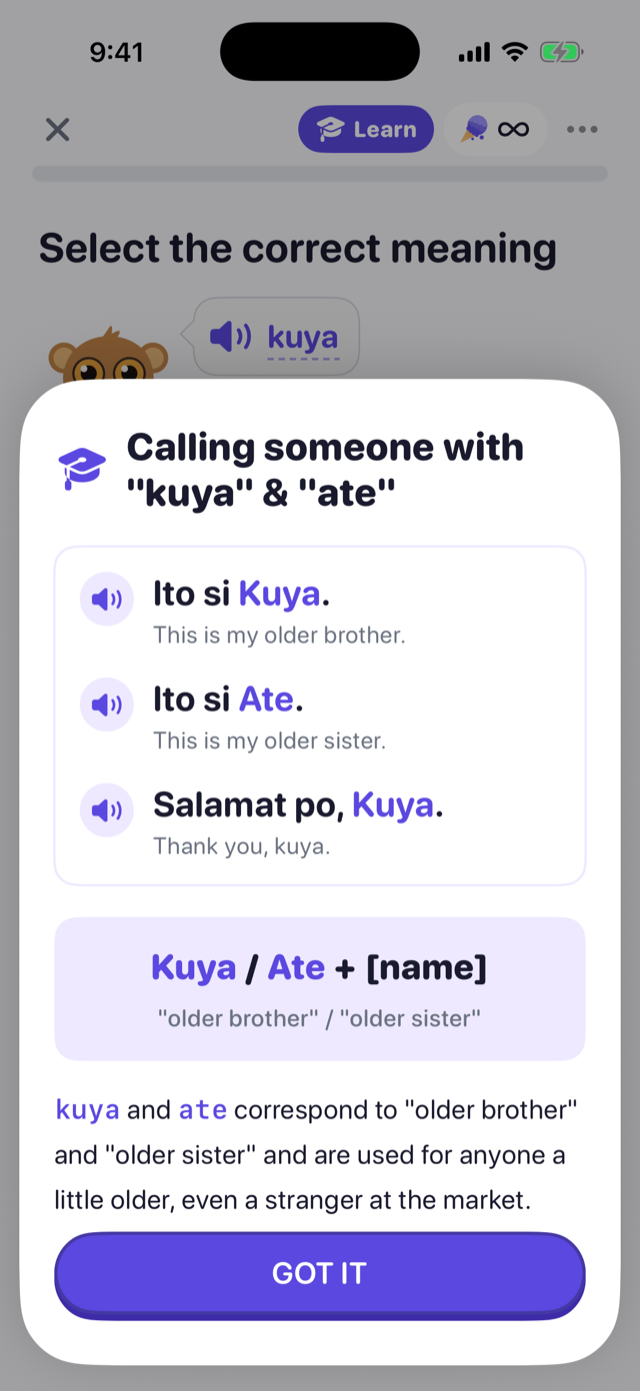
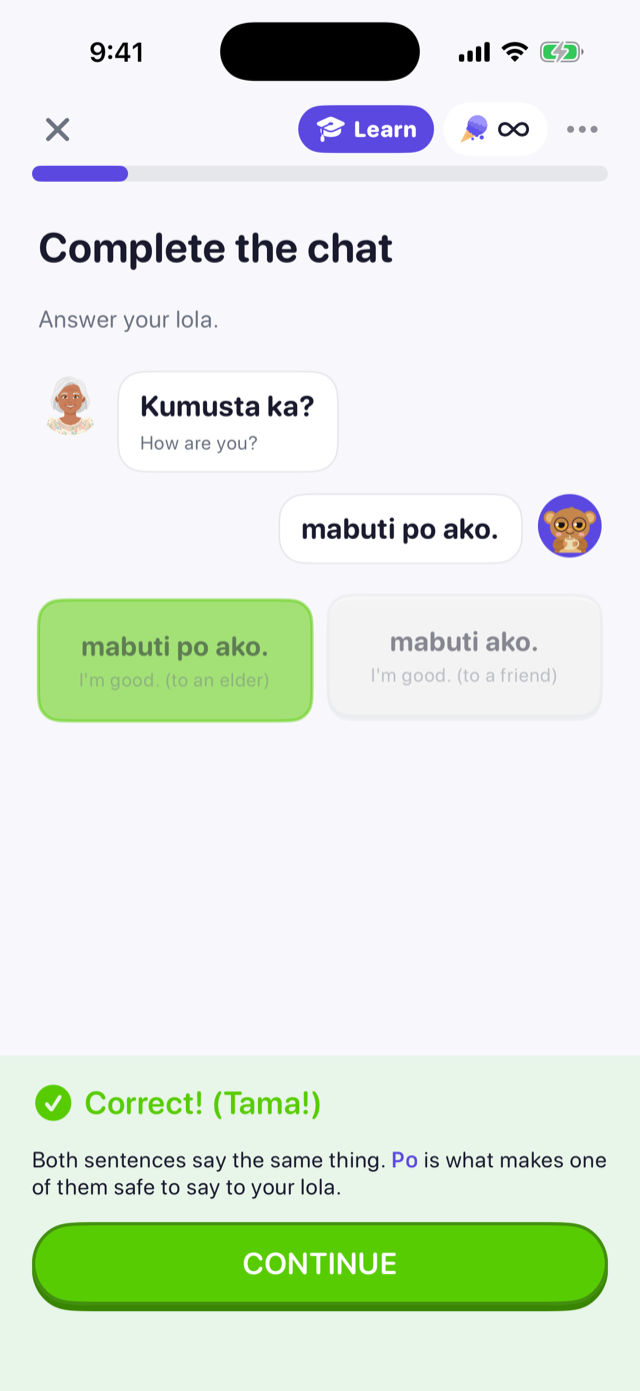
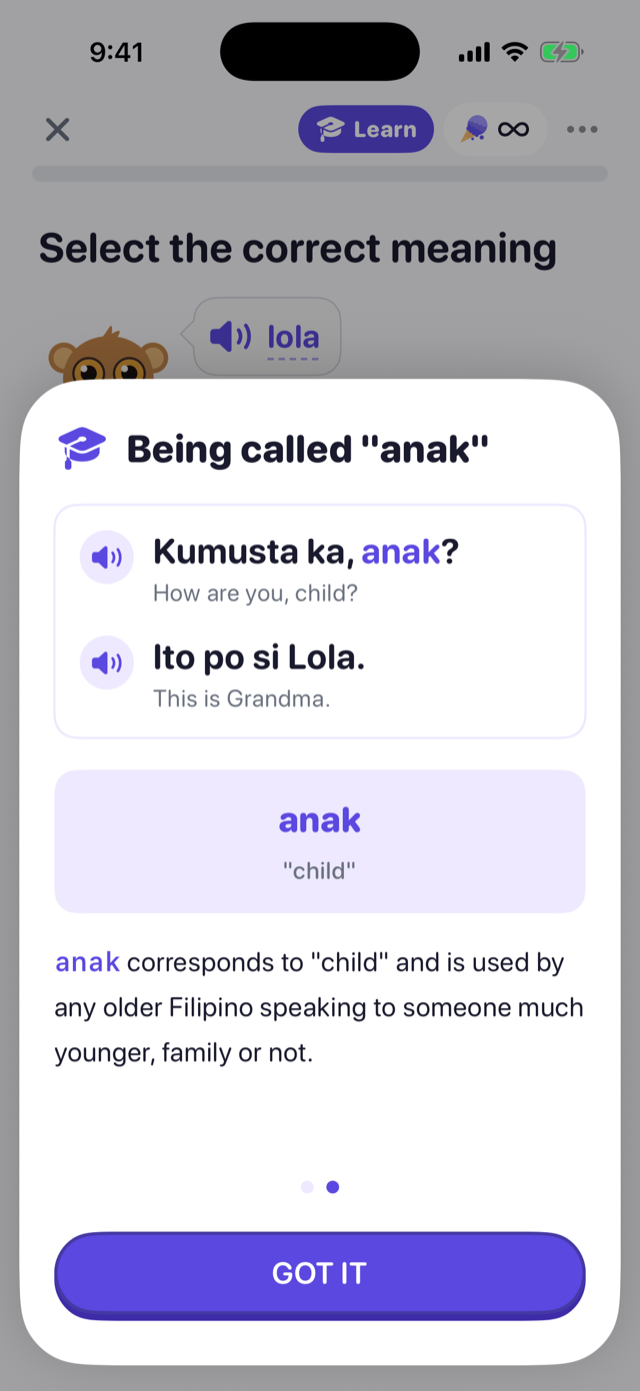
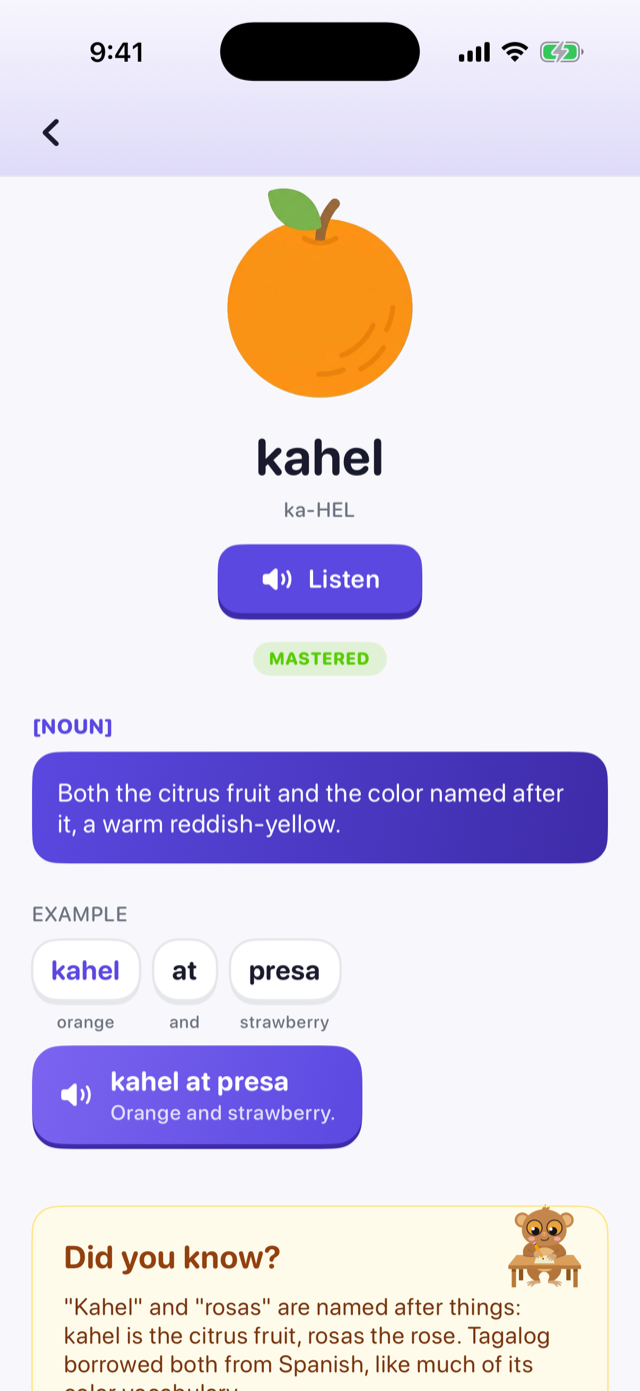
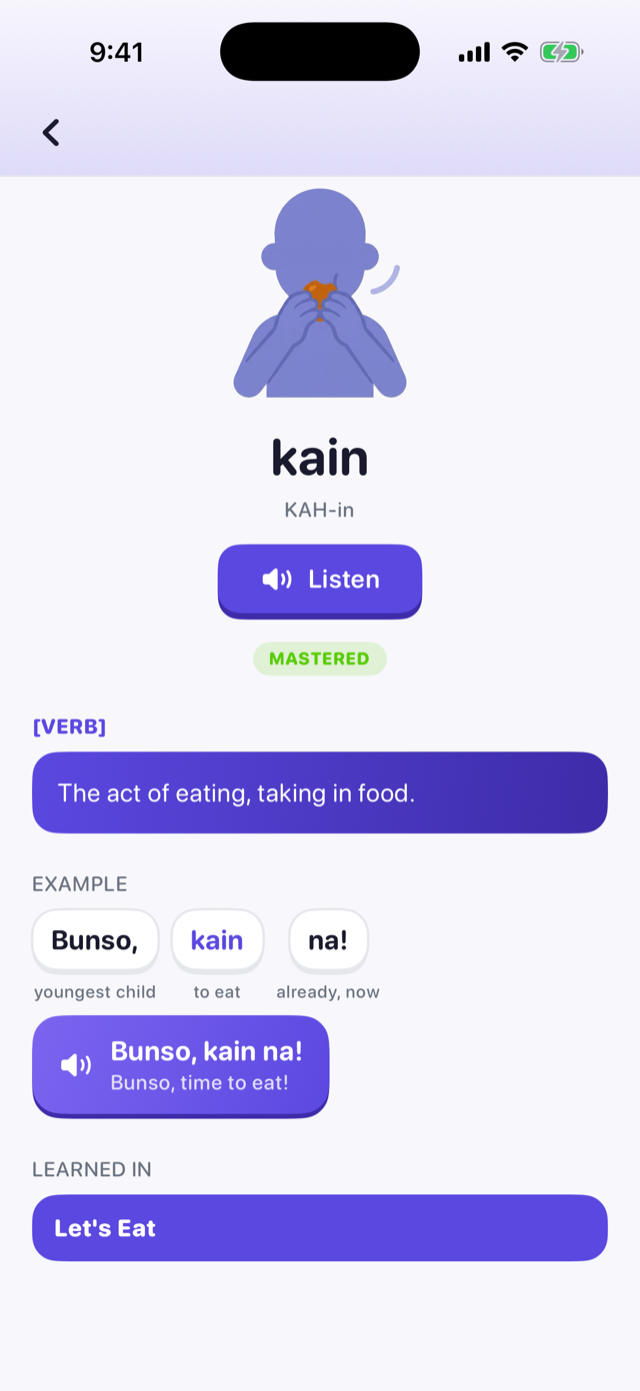
Every lesson is grounded in family, food, and traditions. Learn po and opo before verb conjugation.

🎮

Gamified Lessons

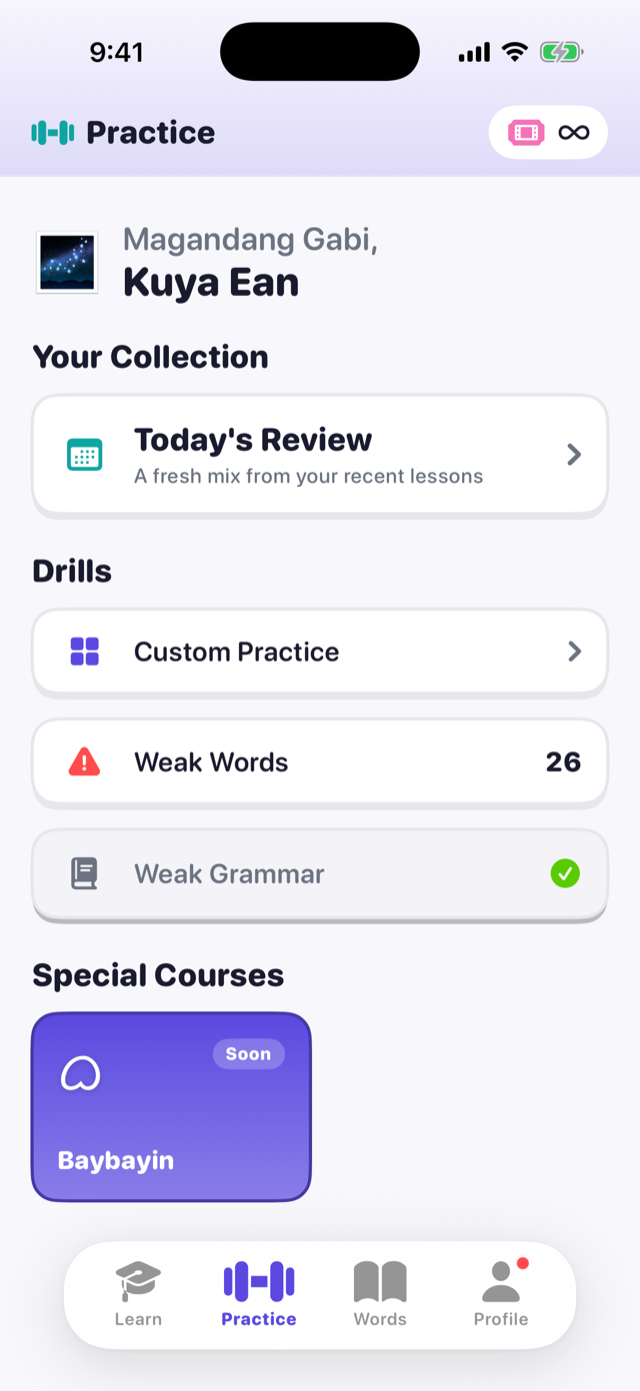
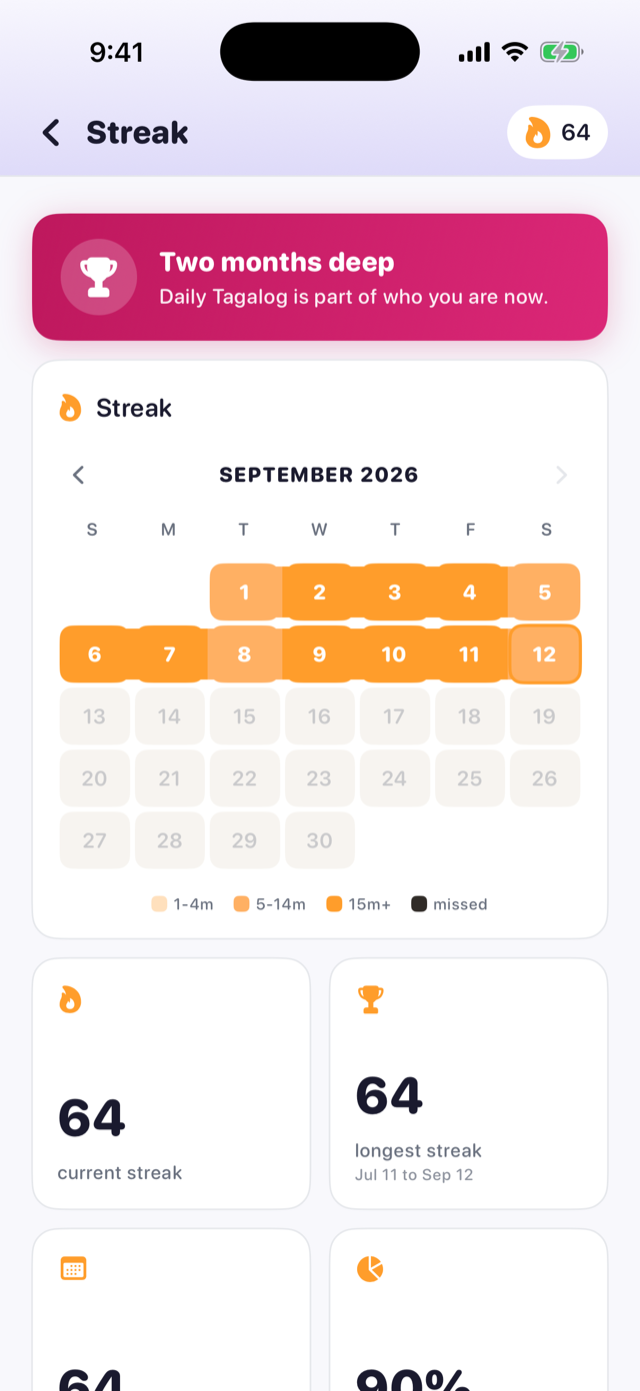
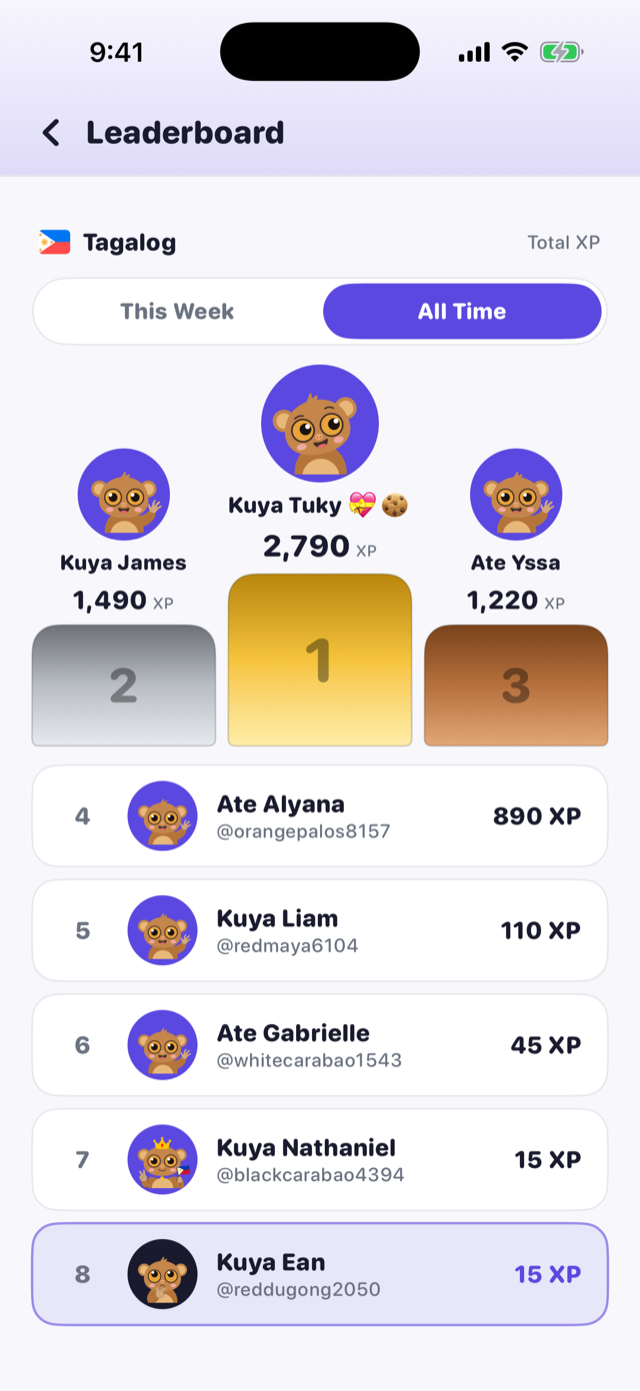
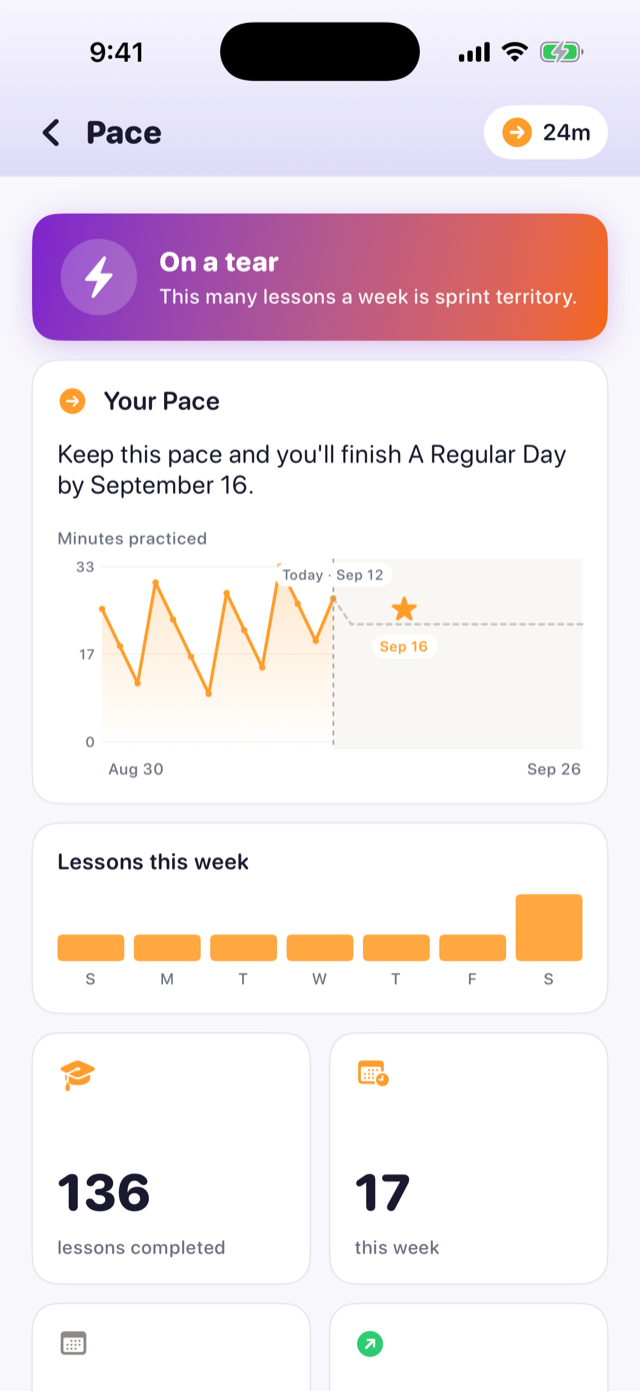
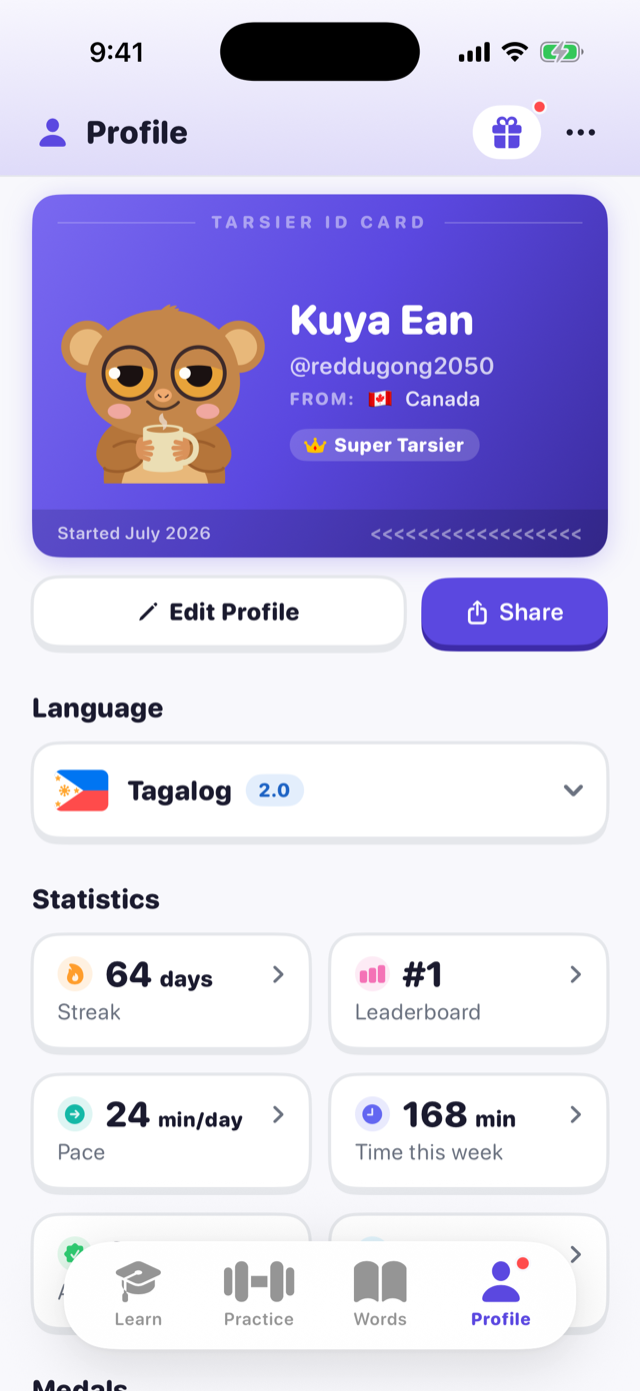
Earn XP, maintain streaks, and level up through 9 chapters and 30+ lessons. Short sessions that stick.

See how Tagalog works

One root, many meanings. Affixes unlock the whole language.

nag
prefix (past)
luto
root (cook)
nagluto = "cooked"
mag
prefix (will)
luto
root (cook)
magluto = "will cook"

Same root, different affix, different tense. This is how Tagalog actually works.

Frequently Asked Questions

Tarsier is a gamified Tagalog learning app for iPhone. It teaches Filipino through roots, affixes, and real cultural context instead of just flashcards.
Yes, Tarsier is free to download and use. Free users have an energy system that refills over time. Super Tarsier removes energy limits and ads for $4.99/month or $29.99/year.
Absolutely. Tarsier was built for heritage learners - people who grew up hearing Tagalog but never learned to speak it fluently. The app starts with cultural basics like po and opo and builds from there.
Duolingo teaches Tagalog through translation drills. Tarsier teaches how Tagalog actually works - the root-and-affix system that lets you build hundreds of words from a single root. It also includes Filipino cultural context and Taglish examples.
Tagalog words are built by adding prefixes and suffixes (affixes) to root words. For example, the root "luto" (cook) becomes "nagluto" (cooked) or "magluluto" (will cook). Learn the patterns, unlock the whole language.
Yes. All lessons, quizzes, and vocabulary are stored on your device. You can learn Tagalog without an internet connection.
Yes. Tarsier plans to add Cebuano, Ilocano, and Hiligaynon (Ilonggo) in future updates. These are the most widely spoken Philippine languages after Tagalog.